
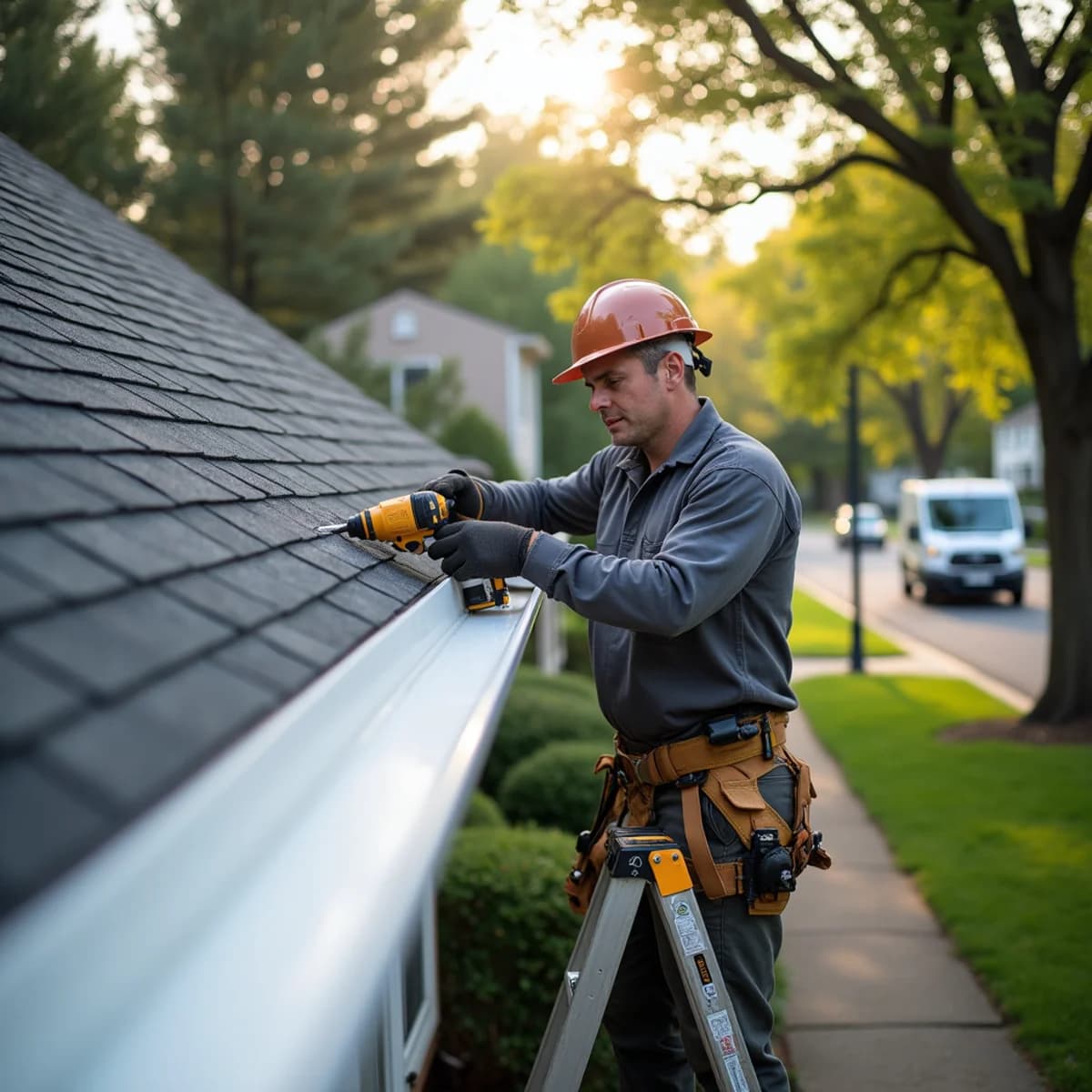
Gutters are your roof's drainage system, when they fail, water backs up under shingles at the eaves, overflows against fascia and siding, and dumps into the soil next to your foundation. Roofing Renew installs seamless aluminum gutter systems, correctly sized and pitched, across Bergenfield, Bridgewater, and Bedminster, NJ.
We install gutters as roofers, which matters: gutter performance depends on drip edge, fascia condition, and how the roof delivers water to the eave. A gutter crew that never looks at the roof above is solving half the problem.
Reviewed by the Roofing Renew team · Published · Last updated
Signs Your Gutters Are Failing
Gutter problems announce themselves if you know what to look for, usually during or right after rain:

Overflow sheeting over the edges
Water pouring over the gutter lip in rain means clogs, undersizing, or insufficient pitch. Either way, it's bypassing your drainage entirely.
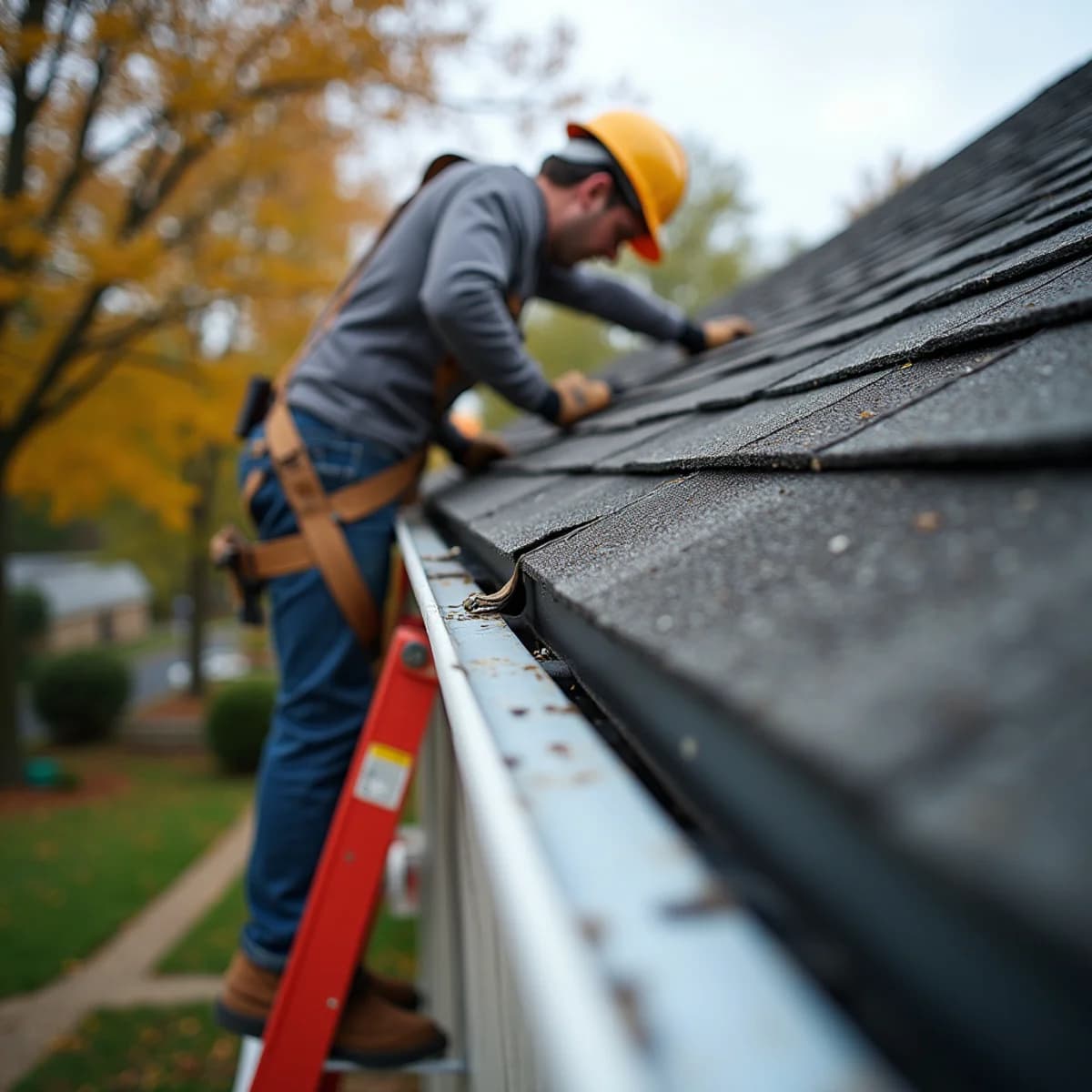
Sagging or pulling away from the fascia
Failed spikes or hangers let sections sag; standing water then adds weight and makes it worse. Often a symptom of rotted fascia behind.
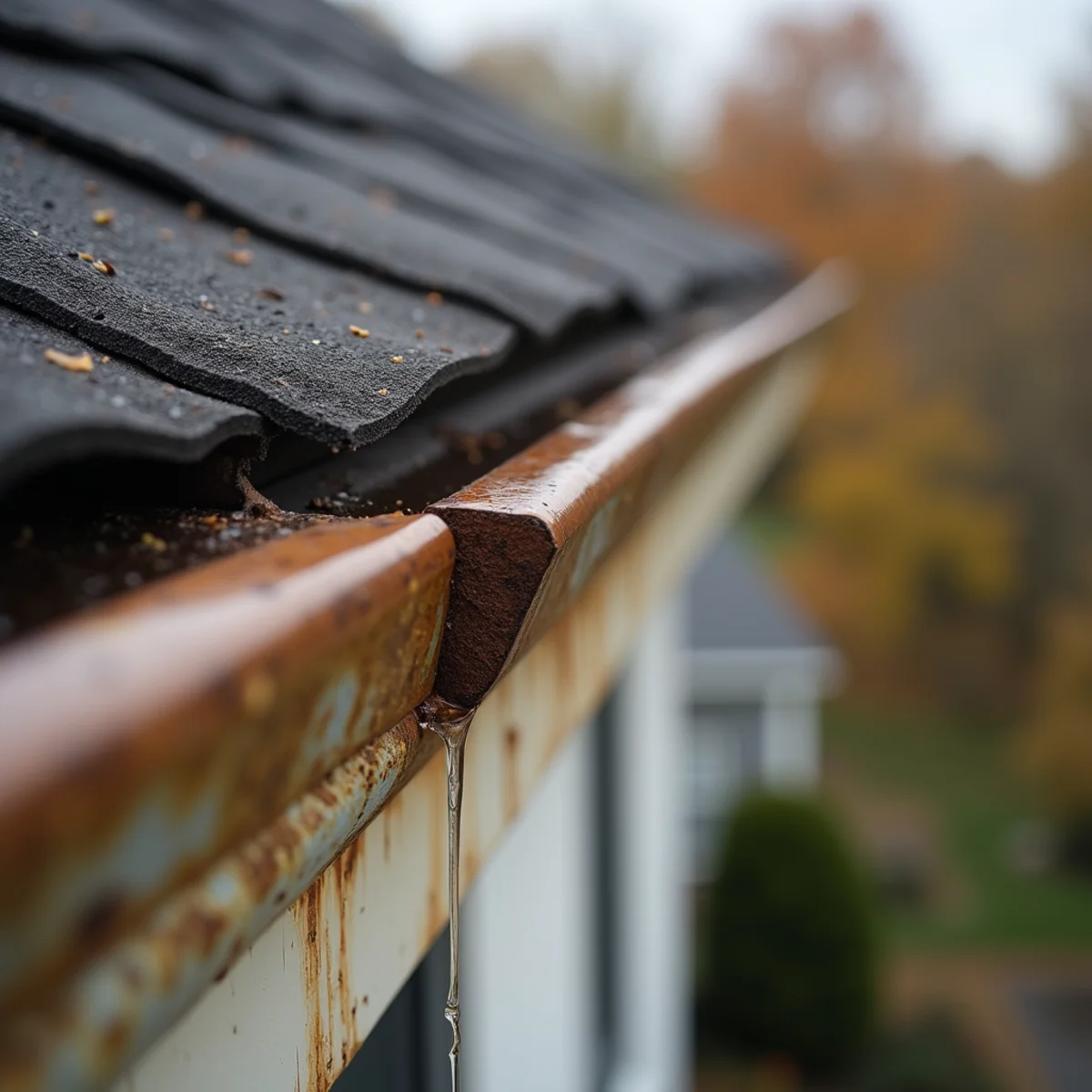
Seam drips and rust streaks
Sectional gutters leak at their joints as sealant ages, the problem seamless systems were invented to remove.
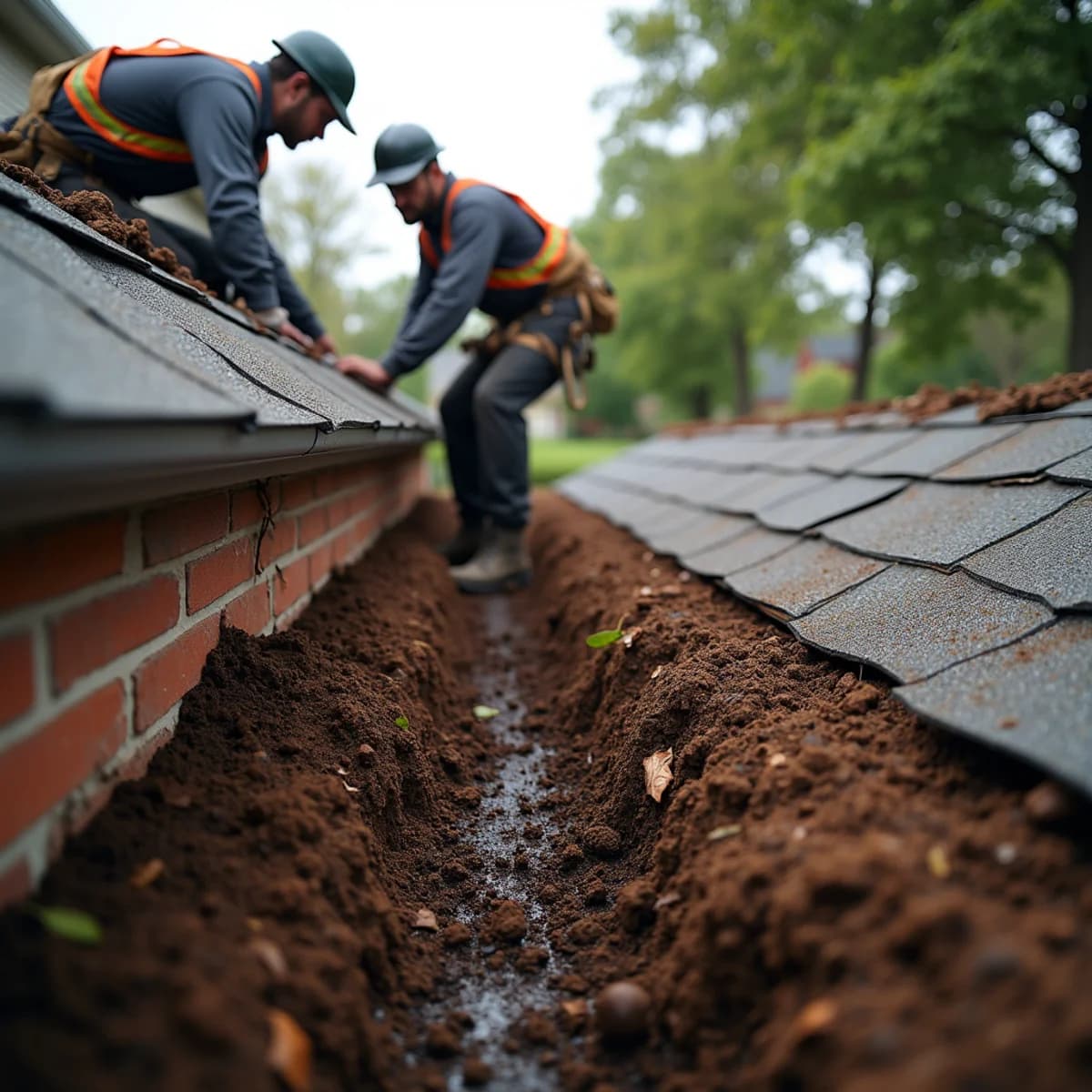
Eroded mulch and soil trenches below
A trench line under the eaves means concentrated overflow hitting the same spot, and soaking toward your foundation.
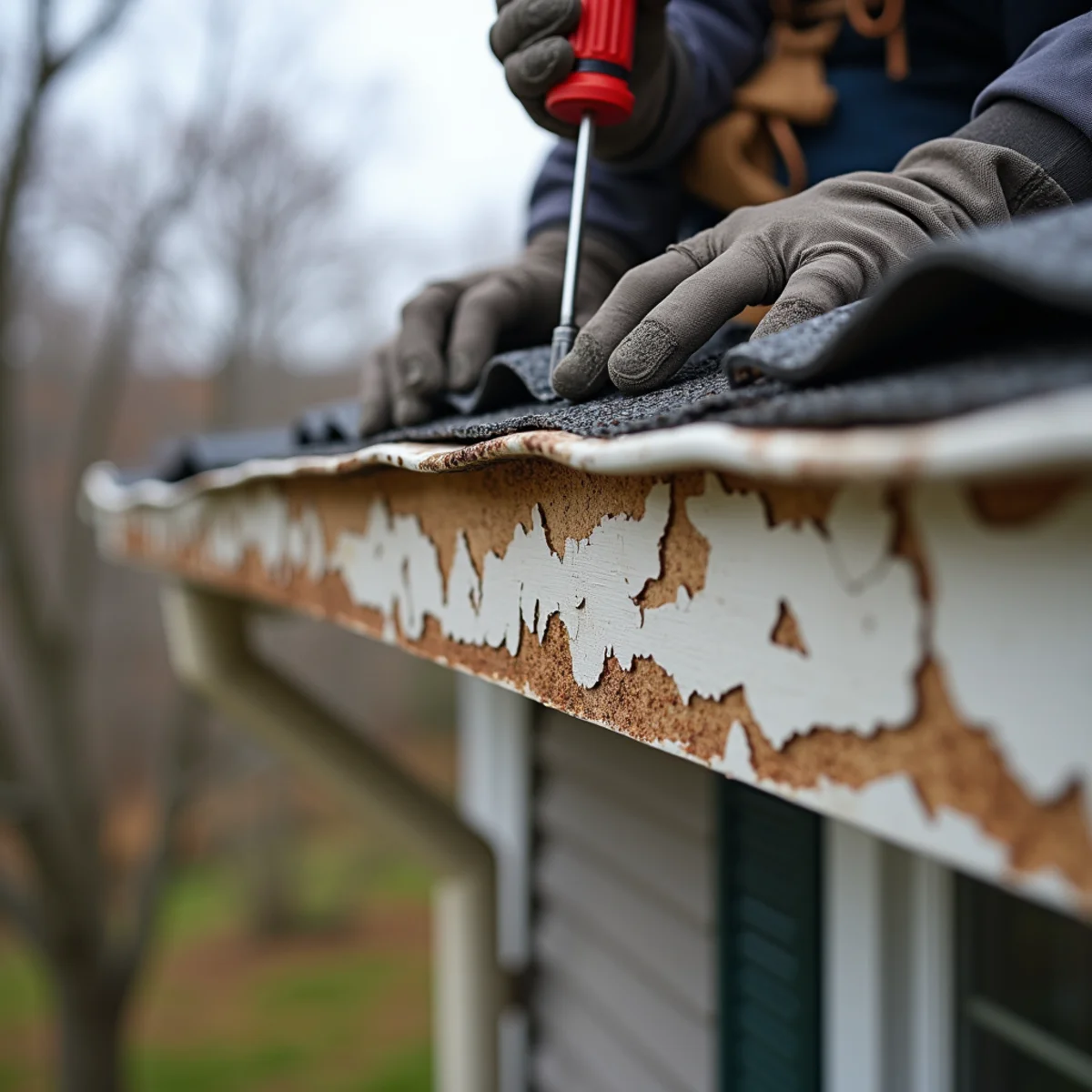
Peeling paint or rot on fascia and soffits
Chronic overflow wicks into the wood trim first. Catch it here and you avoid replacing framing later.

Basement dampness after rain
Downspouts dumping at the foundation are a leading cause of wet basements; extensions and discharge planning are part of a proper install.
Our Gutter Installation Process
A gutter install done right is a design job before it's a ladder job:
Drainage assessment
We measure roof plane square footage and pitch to calculate water volume per downspout, then map where that water should discharge, away from foundations, walks, and neighbors.
Fascia and drip-edge check
Rotted fascia boards are replaced and drip edge corrected before anything new is hung, gutters are only as good as what they're fastened to.
On-site seamless fabrication
Gutters are roll-formed on site in continuous runs cut to your home's exact dimensions, no mid-run seams to open up in year five.
Hanging with hidden hangers, pitched to drain
Hidden hangers screwed to the fascia (not spikes that work loose), with consistent fall toward downspouts so water moves instead of sitting.
Downspouts and discharge
Correctly sized downspouts, placed to handle each run's volume, with extensions or splash management so roof water ends up where it belongs.
Water test and cleanup
We verify flow and pitch, then leave the site clean, with your old gutters hauled away.
What Affects Gutter Installation Pricing
Gutter quotes are linear-footage based, adjusted by these factors:
Total linear feet and downspout count
The core driver, bigger homes and complex rooflines need more material and more discharge points.
Gutter size and profile
Standard 5-inch K-style suits most homes; large or steep roof planes may need 6-inch gutters and oversized downspouts to handle storm volume.
Height and access
Second- and third-story runs, steep terrain, and landscaping obstacles add ladder and staging time.
Fascia repairs
Replacing rotted fascia or correcting drip edge adds scope, and is exactly the wrong corner to cut.
Gutter guards
Adding leaf protection raises upfront cost and cuts cleaning frequency; under heavy tree cover it often pays for itself.
Why Gutters Are a Roofing Issue
Clogged or undersized gutters are a top cause of two expensive problems we repair constantly: eave-edge leaks, where backed-up water wicks under the first shingle courses, and winter ice dams, where trapped water freezes and pries the roof edge apart. If your shingles are staining or peeling at the eaves, the fix may be drainage, not roofing, and we'll tell you which. Gutter checks are built into our roof maintenance program, and eave damage that's already happened is a standard roof repair call.
Are Gutter Guards Worth It in Bergen and Somerset County?
Under the mature oaks and maples that line streets across Bergenfield and shade lots in Bridgewater and Bedminster, open gutters can clog multiple times each fall. Quality micro-mesh guards eliminate most of that cleaning and keep water moving during the leaf drop, the failure window when overflow does the most damage. Guards still need occasional brushing off, and cheap snap-in screens are usually money wasted; we'll give you a straight recommendation based on your actual tree cover rather than a blanket upsell.
Gutter Installation FAQs
Seamless versus sectional gutters, does it really matter?
Yes. Sectional gutters joint every few feet, and every joint is a future leak as sealant ages. Seamless runs formed on site have joints only at corners and downspouts, fewer failure points and cleaner lines.
What size gutters does my home need?
It's math, not guesswork: roof plane area and pitch determine water volume, which determines gutter and downspout sizing. Most homes do well with 5-inch K-style; large, steep roofs, common on Bridgewater colonials, often justify 6-inch.
Should gutters be replaced at the same time as the roof?
If both are near end of life, yes, the drip edge and fascia work overlaps, and sequencing them together avoids damaging new gutters during a later tear-off. We bundle gutter scope into roof replacement quotes on request.
Can you just repair my existing gutters?
Often, re-pitching sagging runs, replacing hangers, resealing corners, and adding downspouts are all legitimate repairs when the gutter body is sound. We'll recommend repair when it genuinely solves the problem.
How do downspouts protect my basement?
Each downspout concentrates hundreds of gallons per storm at one point. Discharging that at the foundation is how basements get wet; extensions, splash blocks, or drain tie-ins move it away. Discharge planning is part of every installation we do.