
Roof Leaking During a Storm? Do These 7 Things Right Now
Reviewed by the Roofing Renew team · Published · Last updated
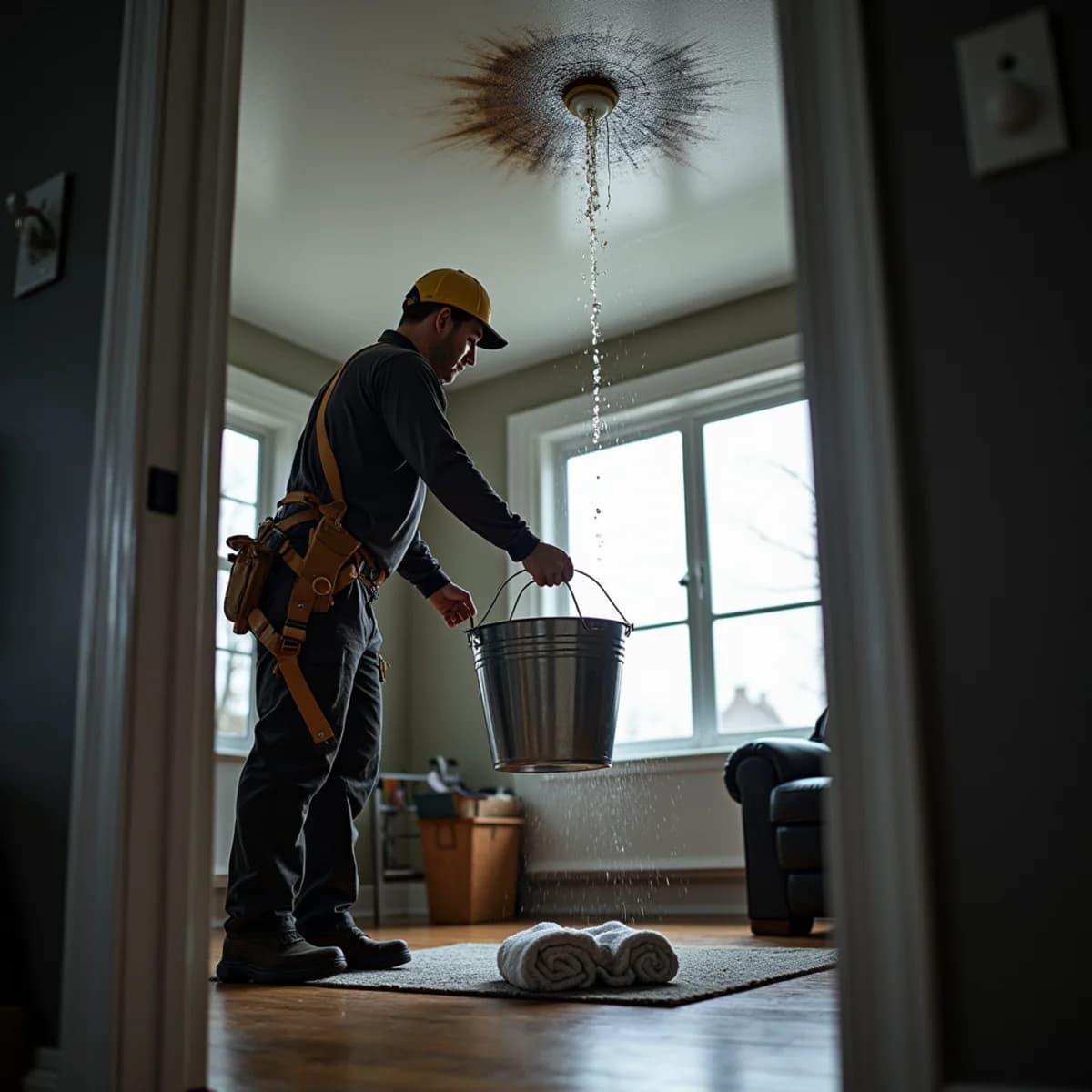
If your roof is leaking during a storm, do these things in order: contain the water, protect what's under it, relieve any bulging ceiling, cut power to affected circuits if water is near fixtures, document everything with photos, call a 24/7 roofer for emergency tarping, and stay off the roof yourself.
The first hour determines whether this is a repair bill or a renovation. Here's each step, with the reasoning, from a team that answers these calls at 2 a.m.
Step 1: Contain the Water
Buckets, pots, towels, get them under every drip point. Put a board or towel inside the bucket to stop the maddening splash and overflow creep. If water is running down a wall, pull furniture away and get towels along the baseboard. Containment buys you time for everything else.
Step 2: Move What Matters
Electronics, documents, photos, rugs, anything upholstered, out of the room or at least out of the drip zone and covered in plastic. Water migrates along ceilings and finds new drip points, so clear a wider area than the current leak.
Step 3: Relieve a Bulging Ceiling, Carefully
A sagging, water-heavy bulge in drywall can drop all at once. If you can do it safely from a step stool, not directly underneath, put a bucket below and pierce the low point of the bulge with a screwdriver. One controlled hole draining into a bucket beats thirty pounds of wet drywall coming down on the carpet. If the sag is large or over your head height, keep everyone out of the room instead.
Step 4: Kill Power to Wet Areas
If water is anywhere near light fixtures, ceiling fans, or outlets, switch off those circuits at the breaker panel. Water in a fixture box can energize surfaces you wouldn't expect. When in doubt, cut the circuit, a dark room is a cheap precaution.
Step 5: Photograph Everything
Before you clean anything up: photos and video of the active leak, the spreading stain, the room, and anything damaged, with timestamps. If this becomes an insurance claim, documentation from during the event is gold; our guide to NJ roof storm damage insurance claims explains exactly how it gets used.
Step 6: Call a 24/7 Roofer for Emergency Stabilization
A roofing crew can usually tarp and stabilize a leaking roof even while weather continues, stopping the intrusion matters more than the permanent fix tonight. Insurers also expect you to take reasonable steps to prevent further damage; waiting days can cost you coverage on the damage that waiting caused. Our emergency roof repair line is answered around the clock across Bergenfield, Bridgewater, and Bedminster.
Step 7: Stay Off the Roof
Not during the storm, not right after. Wet shingles are dangerously slick, wind gusts don't care about your balance, and storm-damaged decking can be soft underfoot. Nothing you can do up there with a tube of caulk is worth a fall. Leave the roof to crews with harnesses and the right footwear.
After the Storm: Find the Real Source
The entry point is rarely above the stain, water travels along rafters and decking before dropping. Common culprits: wind-creased or missing shingles, lifted flashing at chimneys and walls, cracked pipe boots, and gutter backups forcing water under the eaves. Once things are dry, a proper diagnosis and roof repair fixes the cause; if wind or hail did the damage, a documented assessment supports the storm damage claim.
What NOT to Do
- Don't climb onto a wet roof, ever.
- Don't smear roofing cement over the suspected spot; it hides the problem from proper diagnosis and rarely holds.
- Don't sign anything from a door-knocking crew that shows up with the storm.
- Don't ignore a leak that 'stopped' when the rain did, the opening is still there, and so is the wet insulation.
Quick Answers
Can a roofer really tarp my roof while it's still raining?
Usually, yes. Securing a reinforced tarp over the damaged section is designed for exactly this situation, and crews carry gear for wet-roof work. There are limits in high wind or lightning, but stabilization rarely has to wait for a dry day.
Will my homeowners insurance cover a storm leak?
Sudden storm damage, wind, hail, fallen limbs, is generally covered by standard NJ policies; gradual wear and neglect is not. That's why same-day documentation and prompt stabilization matter: they establish the damage as sudden and show you prevented further loss.
The leak stopped when the rain did. Do I still need to act?
Yes. The entry point is still open, insulation and decking are still wet, and the next rain finds the same path. Soaked materials start supporting mold growth within days, dry-out and repair are far cheaper this week than next month.